
Environmental Liability Is Already Being Used as an Energy Source
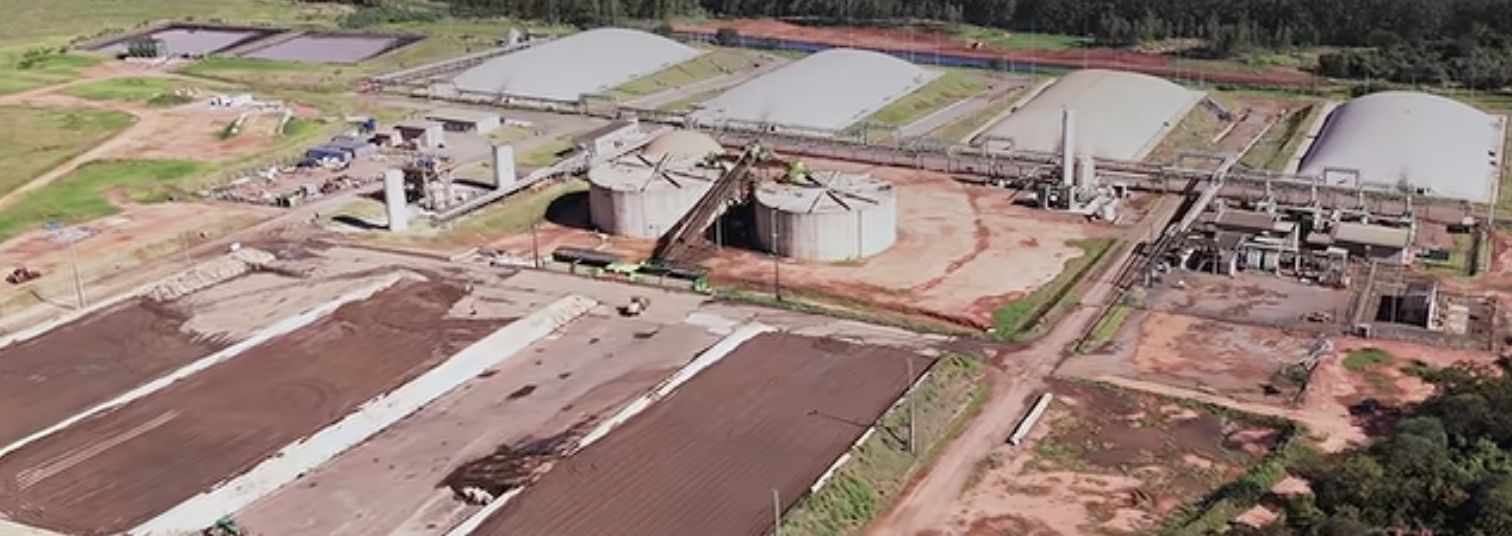
Photo: Usina Cocal/Narandiba. Credit: Esquina.CC
Sugarcane, livestock and urban waste sectors emerge as sources of fuel and revenue for Brazil
SãO PAULO, BRAZIL, September 29, 2026 /EINPresswire.com/ -- Every day, each Brazilian generates, on average, between 0.7 kg and 1.2 kg of solid waste, a volume that increases alongside income and urbanization, according to historical World Bank data. Part of this material, together with agricultural and agro-industrial waste, remains underutilized and, when improperly managed, can contribute to methane emissions — a gas with a global warming potential far greater than that of CO₂. In practice, Brazil discards large volumes of organic matter every day that, instead of becoming an environmental liability, could be recirculated through the economy as energy.This is the gap that the biomethane industry seeks to address, and it is precisely the starting point of the international study From Waste to Wheels: Turning Organic Waste into Renewable Fuel for Transport, commissioned by Instituto MBCBrasil. Biogas is produced through the anaerobic digestion of organic waste, such as sugarcane vinasse and filter cake, animal manure and urban waste. After a purification process known as upgrading, biomethane is obtained and can replace fossil fuels in heavy-duty fleets or be injected into the natural gas grid. The logic is simple, although not always intuitive to those outside the sector. The same material that costs money to dispose of today can, with the right technology, become a source of revenue.
In Brazil, the sugar-energy sector accounts for a significant share of this still-untapped potential. The country has 345 mills in operation, nearly 92% of them located in the Center-South region, and the sector’s biogas potential is estimated at 41.4 billion m³ per year. Yet less than 2% of this volume is currently utilized. The state of São Paulo alone has the potential to generate between 8.5 and 15.5 billion Nm³ of biomethane per year, according to the same assessment. The gap between estimated potential and what is actually developed shows that abundant feedstock alone is not enough: turning this potential into commercial-scale production also requires infrastructure, investment and public policies.
For José Eduardo Luzzi, Chairman of the Board of Instituto MBCBrasil, the case for this market goes beyond the fuel itself. “The most compelling stories are not about fuel; they are about transforming environmental liabilities into economic assets,” he says. In his view, biomethane has the particular ability to address three challenges simultaneously. “The fuel tackles climate change, methane emissions and waste management at the same time.” In other words, biomethane does not compete only with diesel at the pump; it also competes with the cost of inaction: allowing waste to decompose in landfills and release methane into the atmosphere without generating any value.
Beyond its climate benefits, biomethane can also have a positive local impact on air quality. Compared with diesel, biomethane tends to reduce emissions of nitrogen oxides (NOx) and particulate matter, pollutants associated with respiratory diseases. This benefit often receives less attention in public debate, which tends to focus more heavily on global carbon targets than on the air quality in cities crossed by major logistics corridors and heavy-duty fleets, yet it directly affects the health of people living near highways and industrial areas.
Brazil has the conditions to significantly expand its biomethane production, supported by the wide availability of waste from agro-industry, livestock farming and urban waste management. Turning this potential into commercial scale, however, depends on a broader set of conditions. The study highlights the importance of appropriate public policies, access to financing and infrastructure to expand biomethane production, distribution and use. Progress in these areas will be essential for Brazil to make use of its available resources and establish biomethane as a solution for transport decarbonization and the development of new value chains.
Daniela Camillo Mesquita
MÁQUINA DA NOTÍCIA COMUNICAÇÃO LTDA
+55 11 91043-6780
email us here
Visit us on social media:
LinkedIn
YouTube
Documentary by Instituto MBCBrasil follows biomethane production at the Cocal's mill in Narandiba, SP, turning sugarcane waste into renewable fuel
Legal Disclaimer:
EIN Presswire provides this news content "as is" without warranty of any kind. We do not accept any responsibility or liability for the accuracy, content, images, videos, licenses, completeness, legality, or reliability of the information contained in this article. If you have any complaints or copyright issues related to this article, kindly contact the author above.
